The Paper Bag is recycled
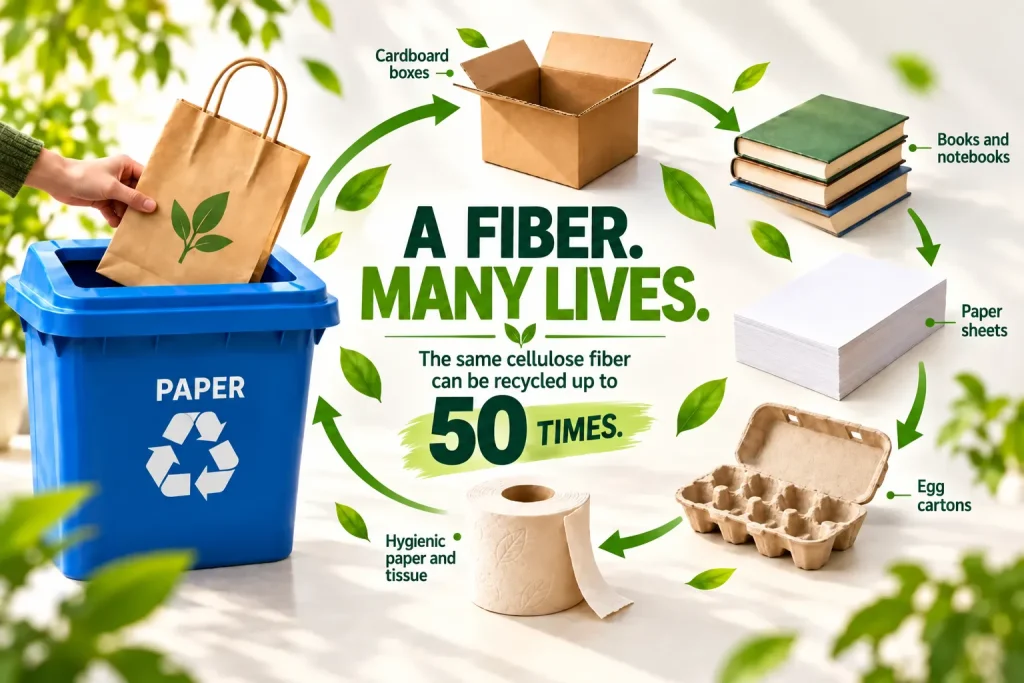
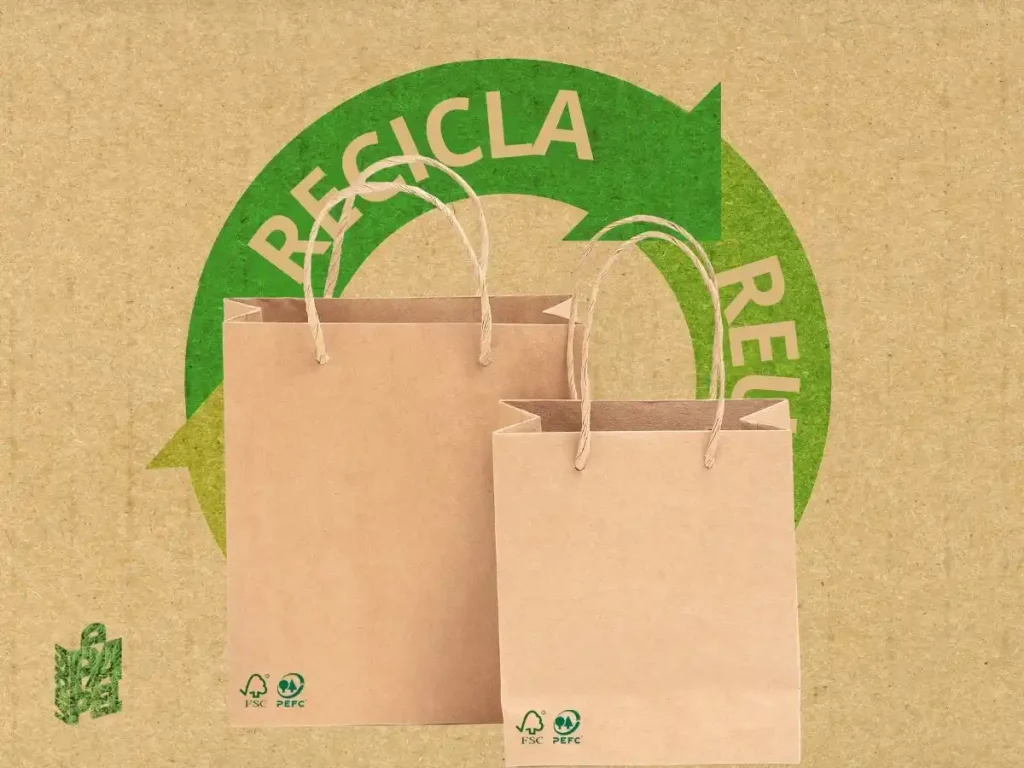
When it reaches the blue bin, its function as a bag ends, but its fibre does not. That same cellulose fibre can re-enter the cycle fifty times over and be transformed into new bags or other paper products.
Its function ends. Its raw material does not.
The paper bag that has accompanied us home and exhausted all its reuses can still be useful in another way. Its fibres can be turned into new bags or other paper products and continue to be part of our lives.
Recycling
A paper bag has up to 50 lives
Every bag eventually reaches the end of its useful life. The difference lies in what happens next. When deposited in the blue bin, its cellulose fibres can be recovered to manufacture new products.
Its function as a bag has ended, but the raw material it was made from still has much to offer. Its fibres can be turned into new bags or other paper products.
Cellulose fibre possesses an extraordinary capacity: it can be recycled up to 50 times, extending its useful life for years. Each new cycle allows us to continue utilising a valuable natural resource and reduces the need for new raw materials.
Because a paper bag can have many lives.
The paper bag is the most recycled
SOURCE: ASPAPEL, Sustainability Report 2025
times cellulose fibre can be recycled, extending its useful life for years.
is the recycling rate for paper and cardboard in Spain, one of the highest in Europe.
football stadiums filled to capacity: the landfill space saved by recovered paper in Spain.
Recovery
The paper bag is part of a cycle that already works
We currently collect almost seven kilograms of paper for recycling for every ten we consume.
This represents a very significant percentage, considering that there are certain types of paper that do not enter the recycling cycle because we keep them (photos, documents, books…) or due to their use (toilet paper).
All the paper recovered in Spain represents a saving in landfill volume equivalent to 52 large football stadiums, such as the Bernabéu or Camp Nou, filled to capacity.
Paper bags are part of this recovery cycle.
When cellulose fibre is used for the first time in paper manufacturing, it is called virgin fibre. When that same cellulose fibre is reused successively through recycling, it is called recycled fibre.

All the paper recovered in Spain saves a landfill volume equivalent to 52 football stadiums filled to capacity.
If the bag were to end up in the natural environment, it would not harm it. Because what comes from nature can return to it without causing damage.
Biodegradability
And if one day it ends up in nature, it's not made to stay
The proper destination for a paper bag is the blue bin. But if it accidentally ends up in the natural environment, the biodegradability of cellulose fibre comes into play: the moisture and microorganisms in the surroundings progressively transform its fibres, allowing them to return to natural cycles.
It leaves no permanent pollution and does not persist for generations in seas, rivers, or soils. An additional quality of paper if a bag escapes the collection circuit.
Blog
Blog articles on recycling
About Us
Who manufactures these bags?
Behind every paper bag there is much more than just a product. There are forest owners, engineers, technicians, designers, and companies that have been innovating for decades to meet the needs of the retail sector.
We are manufacturers of bags, paper, handles, inks, and machinery, united to promote sustainable consumption and innovate in service of retail and consumers.
Long before Europe promoted the new regulatory framework, the paper bag was already moving in that direction. The future doesn’t start today: it has been built over many years.