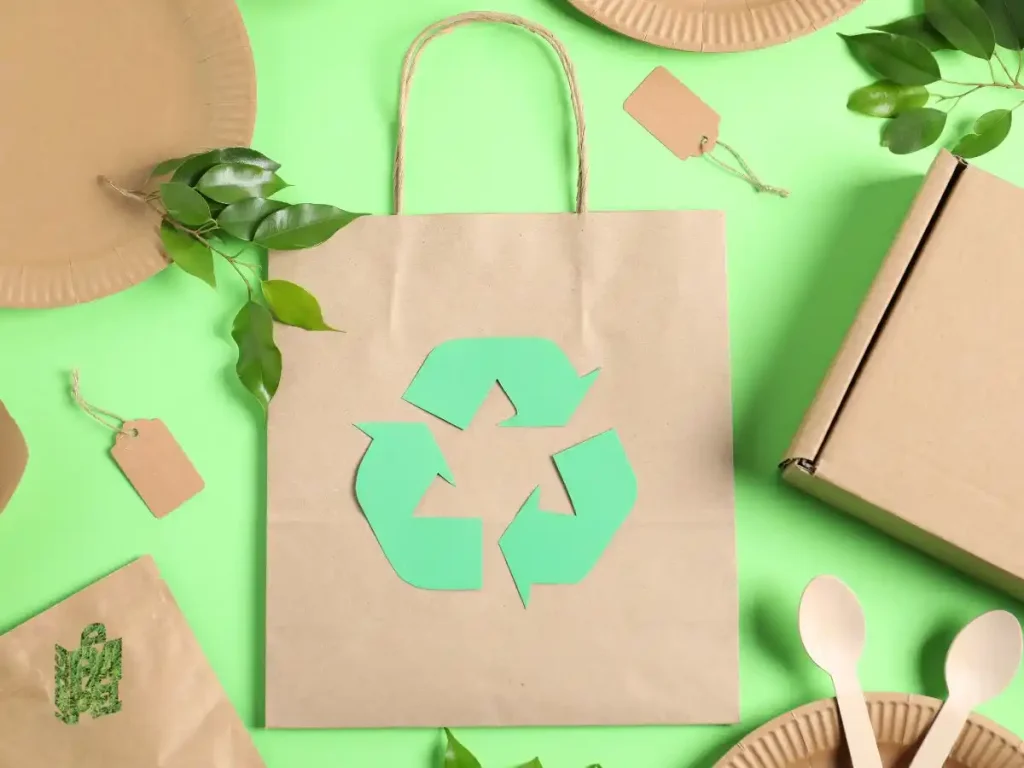
It originates from a renewable, cultivated, and certified raw material. It stores the carbon captured by its trees. It can be recycled up to 50 times. And if it ever leaves the loop, it’s not designed to persist.
Its sustainability isn’t just a quality. It’s its entire journey.

Circular bioeconomy
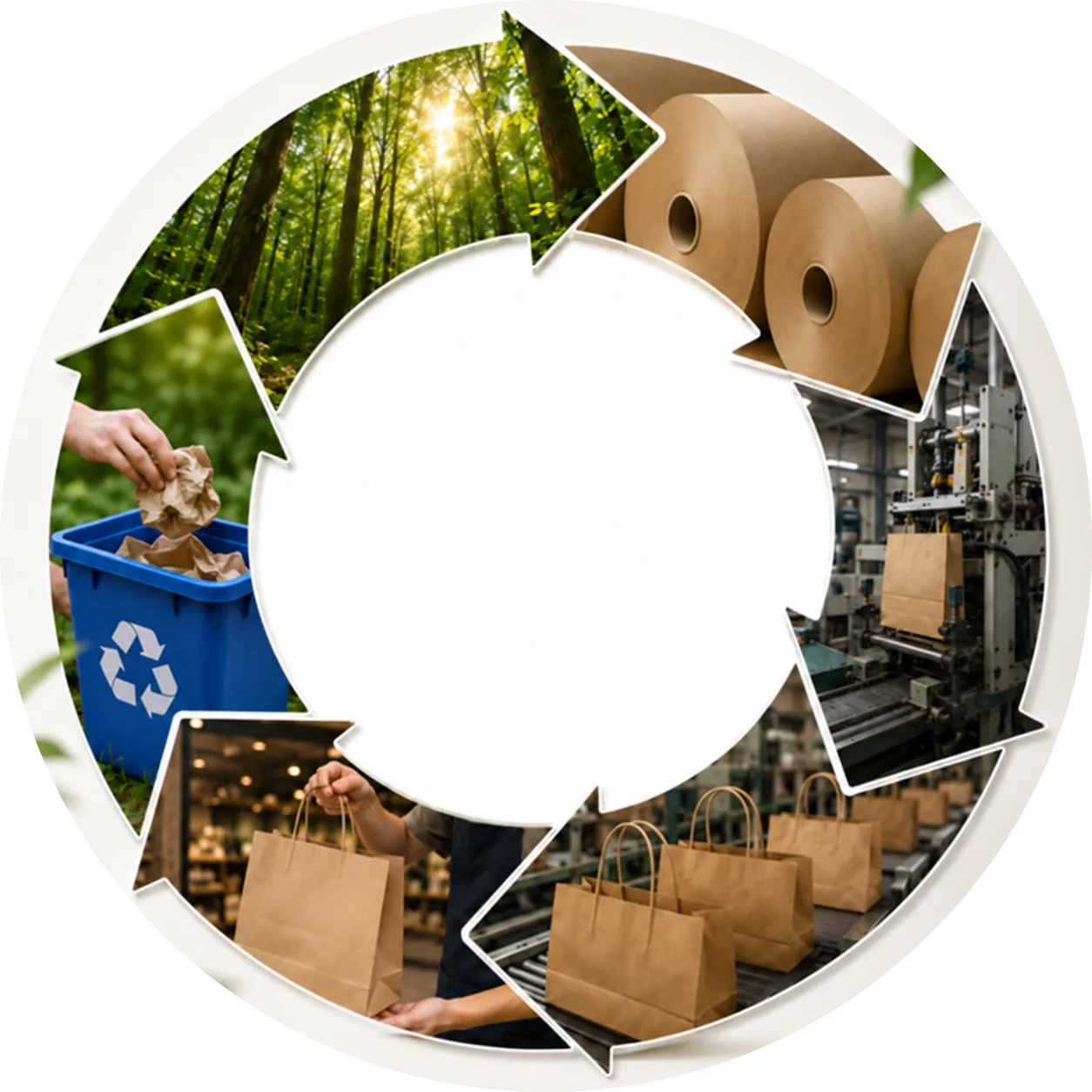
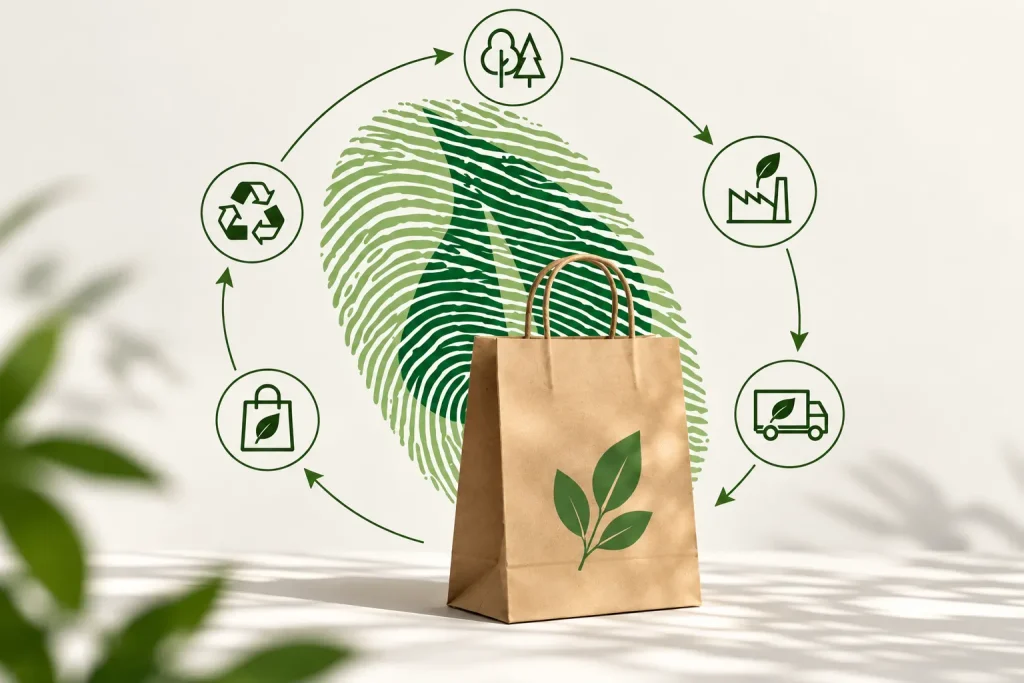
The virtuous circle of the paper bag.
For decades the economy was linear: extract, manufacture, use and discard. Today it is moving towards materials and processes that regenerate: the circular bioeconomy.
However, the value of the paper bag lies not only in closing the loop, but in contributing significantly to sustainability at every stage.
The Origin
Wood is the raw material used in paper manufacturing. This source is natural, renewable, and constantly growing.
Paper is not made from exotic species, oaks, beeches, or holm oaks. Fast-growing species—in Spain, eucalyptus and pine—are used, cultivated in plantations that are continuously regenerated and replanted, and which would not otherwise exist.
Sustainable forest management protects watercourses, conserves biodiversity, and ensures the well-being of those working in the sector.
This represents a great wealth of natural resources and enormous potential to mitigate climate change. Sustainable forest management protects watercourses, increases research into new species, protects biodiversity, and ensures the well-being of workers in the forestry industry.
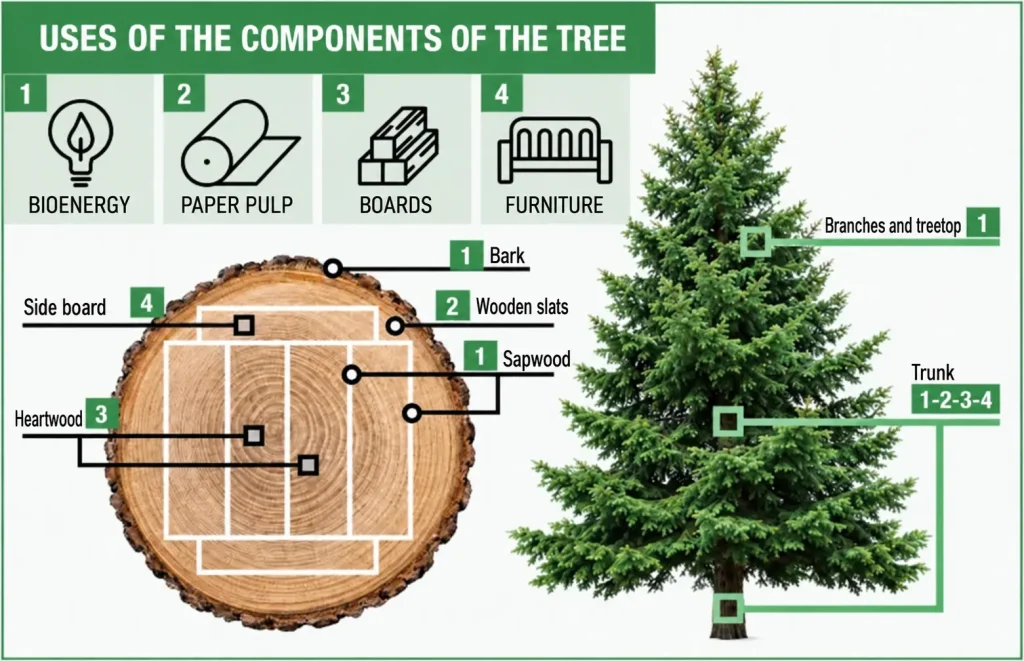
All components of a tree are maximised when harvested; there is no waste. The trunk is typically used for sawn timber and pulpwood. The branches and tree tops are used for bioenergy.
SOURCE: ASPAPEL, Sustainability Report 2025
the European forest area has grown between 1990 and 2020.
hectares of forest: more than a third of Europe is covered.
of the Spanish forest is occupied by eucalyptus and pine plantations for paper.
Traceability
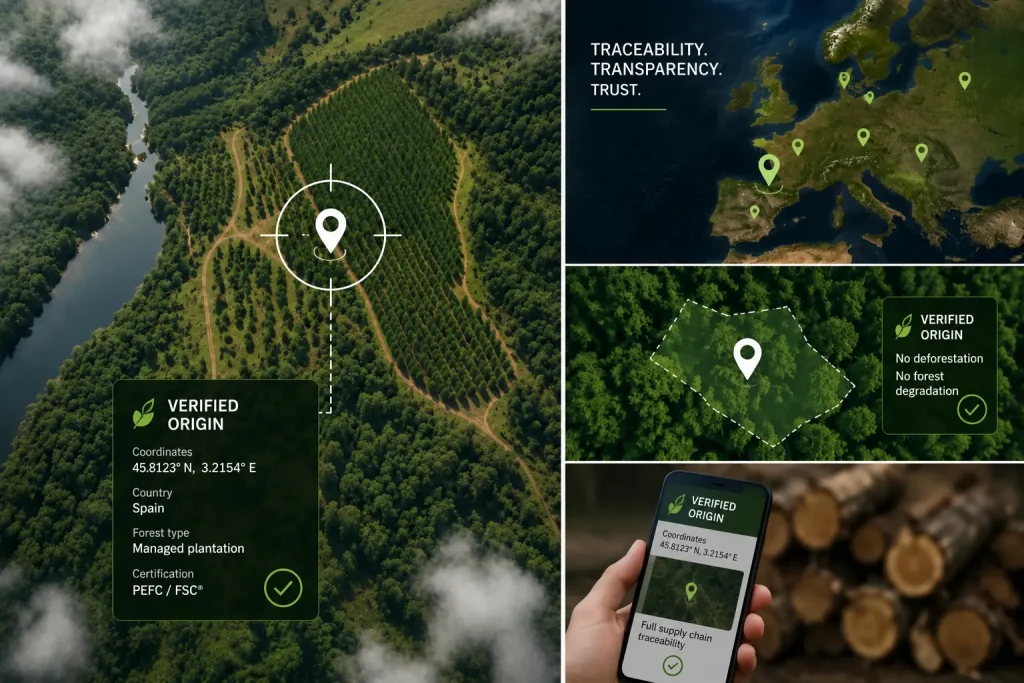
Wood cultivated for paper manufacturing has a traceable origin and verifiable management. The Spanish paper industry has been working for years with forest owners and managers to promote the responsible utilisation of plantations.
This trajectory is complemented by new European requirements regarding the origin of raw materials, which reinforce the checks the sector was already carrying out.
certified origin
The European Regulation on deforestation-free products, known as EUDR, establishes a common framework for various sectors, including paper. In the paper chain, it means strengthening the information and checks the sector was already carrying out to demonstrate where the wood comes from and under what conditions it was obtained.
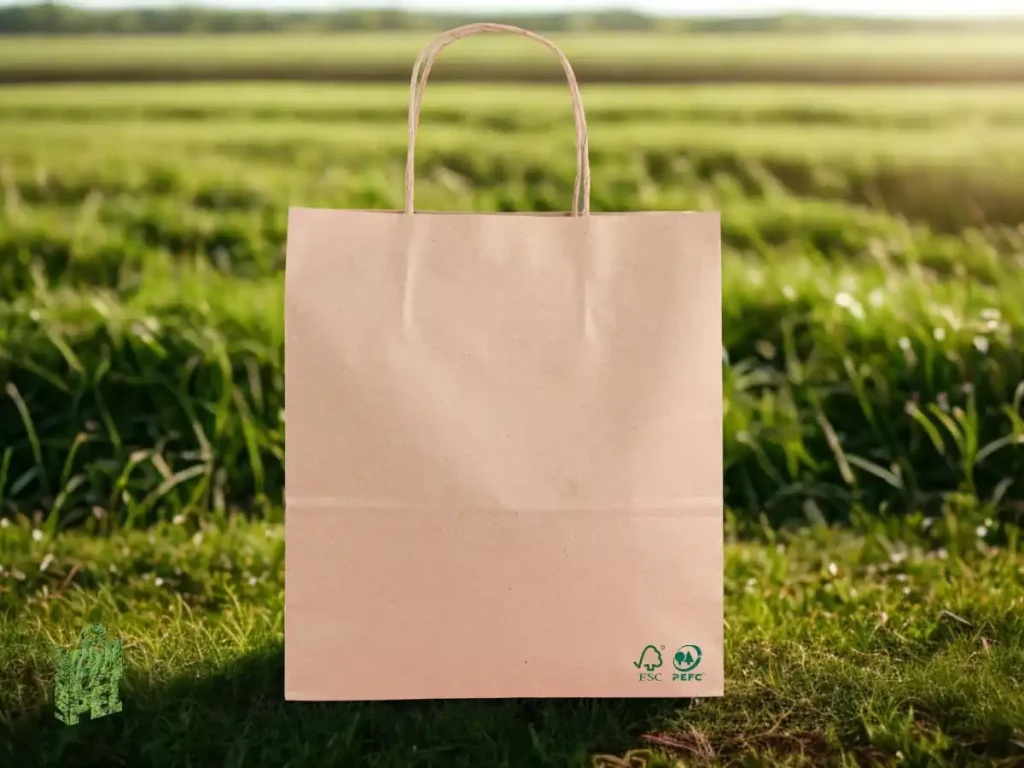
FSC® and PEFC forest certifications complement this framework.
European regulation
Requires accreditation of a deforestation-free origin and compliance with the legislation of the country where the raw material is obtained.
Forest certification
Independent assessments that verify forest regeneration, soil and water care, and biodiversity conservation.
Forest certification
Verifies the management of forest resources and the conditions of the people working in them, along with the chain of custody.
Because trust begins long before the bag reaches our hands.
It starts at its origin.
CO2 Store
One of the lesser-known aspects of paper is its ability to store carbon.
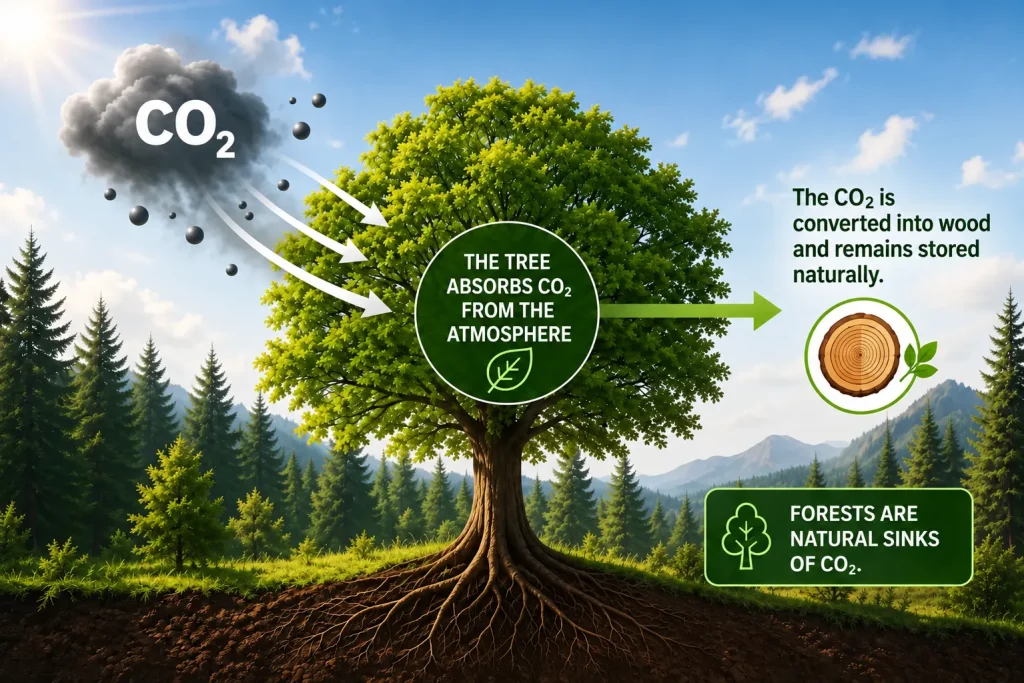
Plantations of species for cellulose fibre are large CO₂ sinks: as young trees grow, they absorb carbon dioxide from the atmosphere, and this remains stored in the forest.
Once it reaches maturity, the forest stops absorbing carbon. That’s why productive plantations, which are constantly renewed, offer a real opportunity to help curb climate change.
The stored carbon is not released when the tree is felled; instead, it remains in forest products like paper bags.
SOURCES: CEPI, EU forest-based industries 2050 · ASPAPEL, Sustainability Report 2025
of CO₂ equivalent is stored by every kilogram of paper. Recycling extends the duration of this sequestration.
of CO₂ equivalent are stored by the 491,370 hectares of Spanish paper-making plantations.
of carbon per year was captured by European forest biomass between 2010 and 2025.
The Lifecycle
All industrial activity generates greenhouse gas emissions. Therefore, to understand the climate impact of a bag, it’s not enough to look at its manufacturing: the origin of the raw material, transport, use, recycling, and waste management at the end of its useful life must also be assessed.
Lifecycle analysis studies conducted to compare different types of commercial bags show that, under the analysed conditions, the paper bag had the lowest carbon footprint among the alternatives studied.
A determining factor was the CO₂ capture during the growth of the trees from which the cellulose fibre originates. This carbon is incorporated into the wood and remains stored in the fibre while it forms part of the paper, contributing favourably to the bag’s climate balance.
Available comparative analyses position the paper bag as having the lowest footprint among the alternatives studied. SOURCE: IVL Swedish Environment Research Institute for Billerud AB, 20 March 2007.
Blog
About Us
Behind every paper bag there is much more than just a product. There are forest owners, engineers, technicians, designers, and companies that have been innovating for decades to meet the needs of the retail sector.
We are manufacturers of bags, paper, handles, inks, and machinery, united to promote sustainable consumption and innovate in service of retail and consumers.
Long before Europe promoted the new regulatory framework, the paper bag was already moving in that direction. The future doesn’t start today: it has been built over many years.